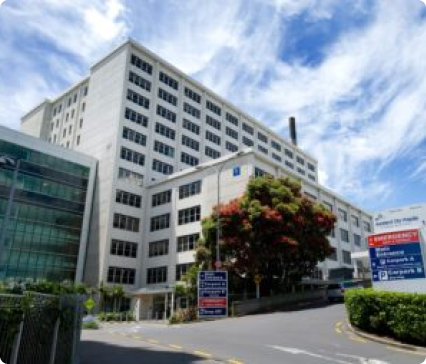
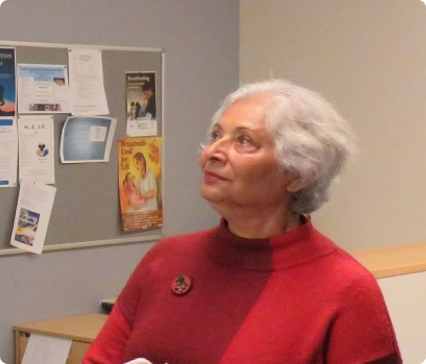
Talking with Dr. Amul Sibal, Cardiothoracic Surgeon and Surgical Director, New Zealand Heart and Lung Transplantation and Mechanical Circulatory Support at Auckland City Hospital, we dive into advancements in transplant medicine, including the game-changing HOPE Box. He shares some of the team’s challenges, highlights innovations that are improving patient outcomes, and discusses how increased funding improves access for deserving heart failure patients in New Zealand.

Q: Can you introduce yourself and tell us a bit about your background?
I’m Dr. Sibal, one of nine cardiothoracic surgeons at Auckland City Hospital and the Surgical Director for Heart and Lung Transplantation and Ventricular Assist Devices. I came from India, but New Zealand has been our home for over 20 years, and we love it here – for both the work we can do and the balance it provides our family.
Q: What are some of the best and most challenging parts of your role?
What excites me is that a lot of our work is cutting-edge and offers phenomenal outcomes for patients. Some of it is only done at a few centres globally. This can be challenging. However, for a small country like ours, I’m proud that our team contributes to this level of care.
One of the challenges of this work is the uncertainty. We don’t have a crystal ball to predict outcomes for someone who arrives critically unwell and near end-of-life. Deciding when to use expensive resources – when those funds are also needed elsewhere – is one of our team's biggest challenges. If we had more resources, we’d love to help more people, but balancing these constraints is challenging.
Q: What sets cardiovascular care at Auckland City Hospital apart from other hospitals in New Zealand and worldwide?
Auckland City Hospital is the national centre for heart and lung transplants and ventricular assist devices (VADs / mechanical hearts) and ECMO life support machines. That makes us unique in New Zealand. Apart from the transplant work, we also offer complex heart, lung and tracheal surgeries to New Zealanders from all over the country. This is expensive and resource intensive care.
Compared to other parts of the world – having worked in Australia myself – in terms of what we do, we strive to be on par with some of the big transplant centres in Sydney and Melbourne, though our smaller population and resource constraints can be real challenges.

Our use of "HOPE Box" (pictured) was a world first, with us and four Australian centres conducting a multi-centre trial to push the boundaries of heart transplantation in terms of how long donor hearts can be preserved. The results were excellent and, now, European and US centres are conducting trials with this technology to further define its role in heart transplantation.
Q: Can you tell us more about HOPE Box?
Traditionally, the donor heart is transported on ice, in a chilly bin (esky) - i.e. static cold storage. There is a clock ticking, with the best outcomes achieved within 3 to 4 hours of the time the heart is put on ice (ischemia time). With HOPE Box, oxygen is continuously supplied, temperature control is superior, and hearts can be preserved for well over six hours.
In the trial, 36 patients had their hearts preserved for more than six hours (up to nine hours), and there were no deaths. This would be unthinkable with traditional preservation. HOPE Box technology has allowed us to bring hearts from the southern tip of New Zealand, and even from Australia, which would've otherwise not been possible.
HOPE Box is a game-changer. Any surgeon who has performed a transplant using this transport would prefer it for every transplant, as the heart is better preserved. But we have to ration its use due to cost.

The technology has Swedish origins (if you look at the box, it looks like a Volvo!) and Sweden has been working on organ preservation solutions for decades, doing lab and animal research. Further pre-clinical research came out of the Critical Care Research Group in Australia, where Professor McGiffin and Professor Fraser’s team led the animal research and feasibility studies. But large animal research is expensive. This kind of research requires funding, including from the industry, and understandably, the company behind this technology eventually needs to recover costs.
We have defined local criteria and have used HOPE Box for the more complex transplants since 2021.
Q: Can you share an example of a patient benefiting from the HOPE Box trial?
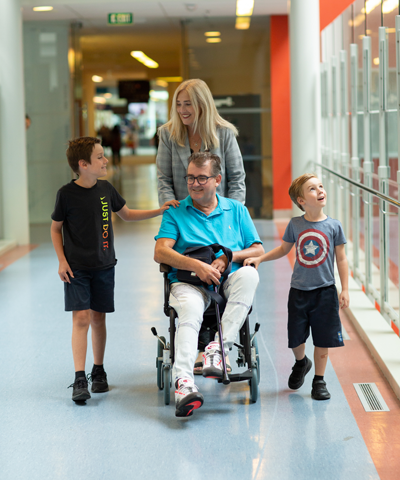
One of many examples is a woman with heart failure due to poor function of both the left and right sides of her heart. She spent several days in the Intensive Care Unit on inotropic medicines and was unable to be discharged. We struggled to find a donor heart in New Zealand, where we have low donor rates. We had two options for her: palliative care or urgent transplant listing, which opens the possibility of getting a heart from Australia. We chose the latter, and she had her transplant in 2021. Without this, she probably wouldn’t have survived another week. And today, she’s back at home with her family.
We have many such success stories, including a 17-year-old boy who could return to his family in Hamilton with a donor heart from Australia, but as I mentioned, we have to ration use of HOPE Box due to costs.
Q: What more could you do if funding wasn’t a constraint?
If funding wasn’t a factor, public and primary care physician education would be key. Sometimes patients arrive too late to benefit from these technologies, but with greater awareness, more people would access these treatments in time.
Additionally, we could increase the number of patients benefiting from mechanical hearts (VADs). Currently, only those eligible for transplantation are considered for VADs, but with more funding, we could offer this as a "destination therapy" for patients who are ineligible for a transplant, which could extend their lives by up to a decade. Other donor pools (donation after circulatory death) for heart transplants are likely to happen in the near future, where we would need greater access to such technology, or some deserving New Zealanders would be disadvantaged.
Q: What would you like to say to supporters about the difference they can make to your work and your patients' lives?
The late Professor Esmore would say that organ donation, especially from a brain-dead donor, is the most precious gift anyone can give. It comes at a very difficult time for the family, when they make the decision to help someone else. As transplanting teams, we should make every effort to help optimise the results of this “most precious gift”.
If we had better access to world-leading technology for heart transplants, like HOPE Box, we could help more New Zealanders, which would align perfectly with this principle – maximising what's possible with a person’s most precious gift.
We would really appreciate any support New Zealanders can give.
Click here to watch a snippet of our interview.
Learn more about Cardiovascular Care at Auckland City Hospital and how you can support this world-class team here.
You can help our hospital help you.
Your support will help Auckland City Hospital’s teams do even more for patients and whānau in their care, beyond what government funding can provide.