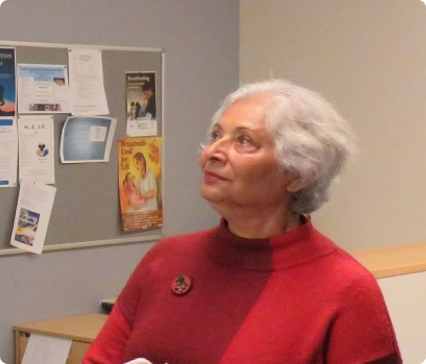
We spoke with Fritha Hanning, Director of the Regional Cancer Centre | Te P?riri o Te Ora, about what makes cancer care at Auckland City Hospital stand out, the team’s innovative approaches to supporting patients, and how donations make an impact.

In the past, when we’ve been fortunate enough to receive donations, entire teams have wept – that’s the difference it makes. The reason they’ve wept is because they understand the impact this support will have on their patients.
Tell us a little about your background and current role.
I started as a cancer specialist in medical oncology and I’m a genitourinary specialist. I still work clinically, but I now also lead the medical oncology service and the region’s broader cancer and blood services.
What are the best parts of your role, and what is most challenging?
The best part is working with an incredible, compassionate, and passionate team. Everyone is dedicated to making a difference for patients and their wh?nau; they work hard at trying to make people’s cancer experience as good as they possibly can.
We’re all working in a space that really matters.
While the work can be overwhelming, it is also a privilege, and I’ve never had a boring day.
The most challenging aspect is wanting to do more for patients and sometimes feeling limited. It’s heart-breaking when you can’t pull more rabbits out of hats for people, but we can always offer compassion and sit in that space with them, which my team does incredibly well.
How many people does your team care for?
We’re one of the biggest cancer centres in Australasia, so we care for a huge number of patients. In our chemotherapy day-stay unit and clinics, we treat around 100 patients every day.
Our radiation department operates six machines, delivering around four treatments per hour, per machine, making us one of the most efficient radiation therapy centres globally.
A radiation cancer facility is now being built in Whangarei, to treat more than 500 patients in Northland, which is part of our efforts to bring care closer to communities and ensure people don’t have to travel far for vital treatments.
What are some examples of how cancer care at Auckland City Hospital differs from other hospitals here and worldwide?
Traditionally, we haven’t had as much access to medications as some countries, like Australia or the UK. But with the government bringing forward new cancer drugs, our teams are looking at how we can be ready and transform our models of care, and work in the community, closer to people’s homes.
We’ve been developing a programme called the Integrated Cancer Service, partnering with community organisations to bring care closer to where people live. We know that where we’re delivering services and where people need the services aren’t perfectly aligned; we don’t want people taking three buses to receive cancer treatment, so this programme will make a big difference to the community.
Now, can we do more? Absolutely.
Which aspects of cancer care are covered by government funding, and what areas rely on donations and philanthropy?
Government funding supports us to deliver services like chemotherapy, radiation therapy, and stem cell transplants. However, enhancing a patient’s experience often relies on philanthropy. Patient feedback has identified areas where we could improve, like providing more space in our chemotherapy day-stay unit and creating areas with nature and water features to help people recharge.
Research has revealed that patients in our day-stay unit want more space, warmth (especially during fluid treatments), and access to outdoor areas. We want to enhance the patient experience by creating more family spaces and improving the overall atmosphere and environment, possibly by redeveloping our central atrium into a usable garden area. We’d love to have philanthropic support for projects like these.
We are currently working on a business case to build a purpose-designed brachytherapy suite for women undergoing cervical cancer treatment. This would eliminate the need for patients to move between hospital locations mid-treatment, during an uncomfortable and personal procedure, and it would shorten the overall treatment time. It would be great to upgrade the proposed brachytherapy suite, and philanthropy could certainly make that possible.
What has previously been funded by donations to benefit cancer patients at Auckland City Hospital?
Philanthropy has made an enormous impact. For example, our beautiful Motutapu Ward for stem cell transplant patients, was made possible through generous donations. It has private rooms, fold-down beds for relatives, a patient gym for rehabilitation, and calming decals on the walls – these things make a huge difference to patients undergoing intensive treatments but they wouldn’t have been possible without donor support.
We’re now progressing work on a haematology day-stay facility that will sit next to the Motutapu Ward. It will help patients transition from inpatient to outpatient care and enable them to go home sooner, while still receiving the necessary care. Donations would help us add vital extras in the facility for patients and wh?nau during a really challenging time.
We’ve also received incredibly generous gifts towards research, which have brought university research into our services, collaborating with the Academic Health Alliance. Thanks to these gifts, our teams are engaged in some truly amazing research and development work.
If funding constraints weren’t a factor, what more could your team do for people?
There is so much we could do – we would be very excited! There’s a whole lot more that we would like to bring in.
The team would make things better for people by introducing new equipment and treatments, and transforming environments for patients.
Our work is moving in the right direction, but we would move faster, and we would do more to take our mobile treatments into communities.
We would ensure we kept pace with technological developments that are happening, such as looking at novel treatment machines for radiation therapy. We would be able to look at things like proton therapy, which works by disrupting a tumour’s DNA.
“Hospital in the home” initiatives could be expanded, with innovations like fluid backpacks for chemotherapy patients and wearable monitoring devices that track vitals and alert hospitals if issues arise, allowing patients to spend more time at home.
Digital enablement is critical too, such as an electronic chemotherapy prescribing system, which will be running by year-end. This will streamline treatment, and improve safety and efficiency. Future innovations could include virtual technology for consultations, potentially even allowing healthcare teams to appear as holograms in patients’ homes, enhancing convenience and the patient experience.
More funding would mean we could move faster with innovative, patient-focused care solutions; and the opportunities are endless.
What would you like to say to supporters about the difference they can make for your team’s patients?
I think it’s important to understand the degree of passion that our team has for caring for people. We all know it’s very rare for a family not to have been touched by cancer, so the staff often have a significant “why” for coming to work here.
In the past, when we’ve been fortunate enough to receive donations, entire teams have wept – that’s the difference it makes. The reason they’ve wept is because they understand the impact this support will have on their patients.
To our supporters: please know that you are making a significant difference for people in your community, for your family, and for your friends, because those are the people we serve.
Our team is grateful for any help that can improve the experience for our patients.
Click here to find out more about Cancer Care at Auckland City Hospital.
You can help our hospital help you.
Your support will help Auckland City Hospital’s teams do even more for patients and whānau in their care, beyond what government funding can provide.