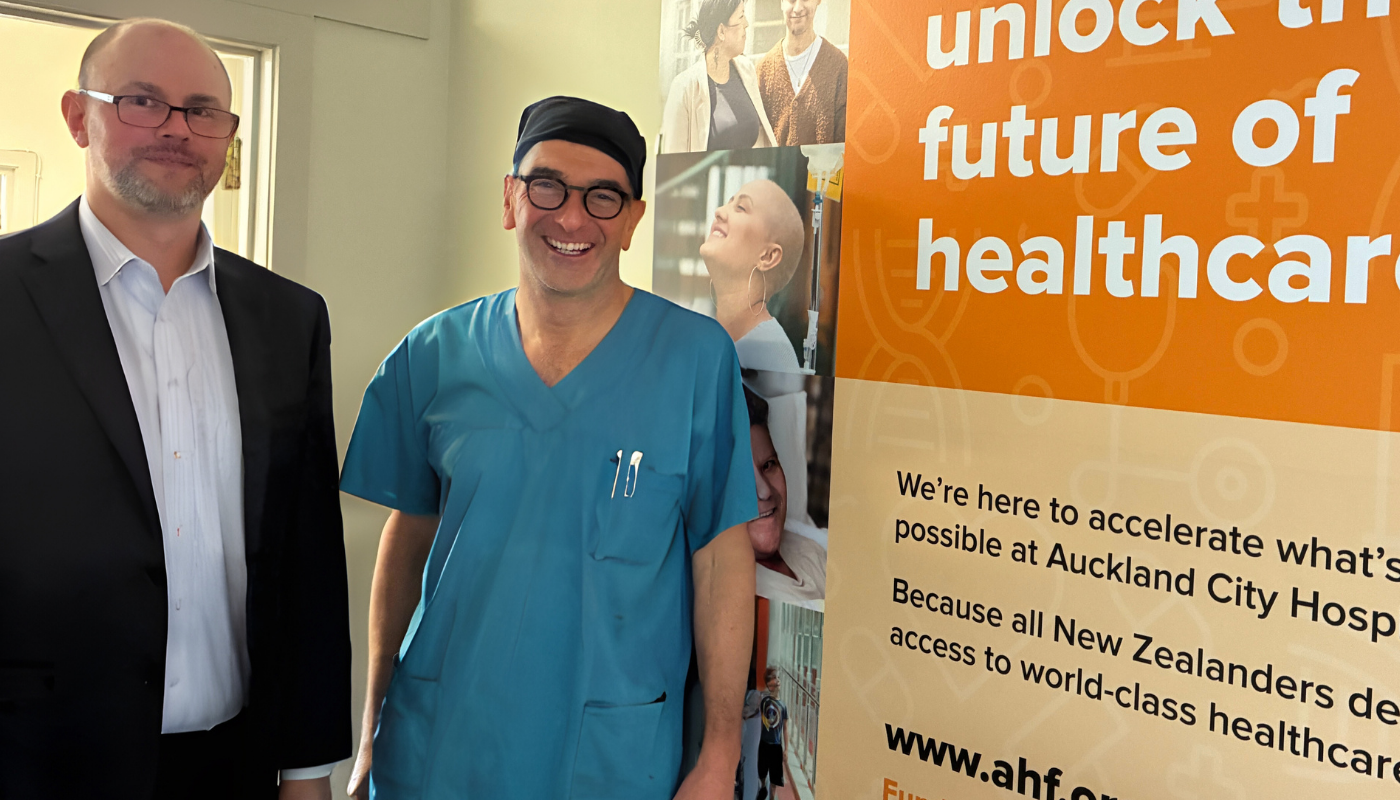
We sat down with Dr Nigel Lever and Dr Andrew Martin, specialist cardiologists leading New Zealand’s cardiac lead extraction service, which provides lifesaving care for patients nationwide. They shared the importance of their team's work and explained where donations can help.
Can you introduce yourself and tell us a bit about your role?
[Nigel] We are clinical cardiologists specialising in heart rhythm disorders – slow, fast, or disorganised heartbeats. Our main focus is in a highly specialised area involving implanted cardiac devices such as pacemakers and defibrillators, particularly when there are issues to manage, like infections or device failure.
When the transvenous device lead needs to be removed, patients from across New Zealand are referred to Auckland City Hospital for treatment by the National Lead Extraction service, which I run with Andrew and our specialist team.
What are the best parts of the job?
[Andrew] The best part is the people and working with cardiologists across the country. Nigel and I are the only two clinicians in New Zealand doing these procedures, so we collaborate extensively with colleagues nationwide to support patients locally.
Rather than simply referring patients or managing complications, we work together to deliver care. Helping patients recover and improve is incredibly rewarding.
What are the main challenges?
[Andrew] A major challenge is variation in cardiac services across the country. Some patients live far from tertiary centres and face long, complex referral pathways. In some regions, referral rates are lower, which can delay care. Early referral is critical, particularly for severe infection, where early treatment significantly improves outcomes.
The second challenge is coordination. Patients don’t become unwell on a timetable, so providing urgent care outside our scheduled times requires significant effort to assemble the team and access theatre space.
This service must remain responsive to urgent patient needs, while also managing planned, elective care.
Over time, with increasing case volumes, a dedicated environment has been created to support lead extraction alongside structural heart disease and interventional radiology. The service continues to evolve, and while future needs may change, this shared space has been critical to our success.
What sets your work apart nationally and internationally?
[Nigel] This work requires a high level of expertise across multiple specialist groups, and Auckland City Hospital is the national centre, where all those capabilities are consolidated.
Internationally, we benchmark ourselves through collaboration with the Cardiac Society of Australia and New Zealand, as well as Asia-Pacific and global heart rhythm networks. These connections allow us to share data, compare outcomes, and ensure our performance meets international standards. Andrew has led important work in establishing our registry to measure and publish our results.
How many people do you treat, and what difference does it make?
[Nigel] We treat around 40–50 patients each year, with over a third referred due to infection. Untreated device-related infection carries a high mortality risk. With lead extraction, that risk drops to around 10–20% within a year, so removing infected leads is often lifesaving.
The second major group we help are younger patients with lead failure. Without extraction, these patients may accumulate multiple abandoned leads over time, increasing the risk of long-term complications. By removing failed leads and implanting a new system, we effectively reset the clock, allowing patients to return to normal life.
Since the National TLE Service was established at Auckland City Hospital in 2016, patient referral numbers have steadily increased as clinicians around the country recognise the long-term benefits of proactive lead management.
How is the service funded, and where does philanthropy help?
[Nigel] Lead extraction is currently fully funded within the public health system. However, costs rise as newer or different tools become available, and access to some equipment may become limited or unachievable.
[Andrew] Philanthropy is particularly valuable for advanced equipment and training. Some tools involve consumable and reusable components, and while we carefully balance safety, effectiveness, and cost, certain equipment and simulation training opportunities fall outside standard funding. Philanthropic support in these areas helps build and sustain the next generation of specialists and the wider multidisciplinary team involved in this complex care.Some advanced tools – particularly those used to manage infection – are not currently funded, and this is where philanthropic support could make a difference.
To learn more about Cardiovascular Care at Auckland City Hospital, and how you can support this world-class team, click here.
You can help our hospital help you.
Your support will help Auckland City Hospital’s teams do even more for patients and whānau in their care, beyond what government funding can provide.