We go inside the Cardiothoracic and Vascular Intensive Care Unit (CVICU) at Auckland City Hospital, with Intensivist and Anaesthetist, Bevan Vickery. He discusses his work in caring for critically unwell patients, the scale and complexity of the CVICU, and the role of ECMO in saving lives across New Zealand.
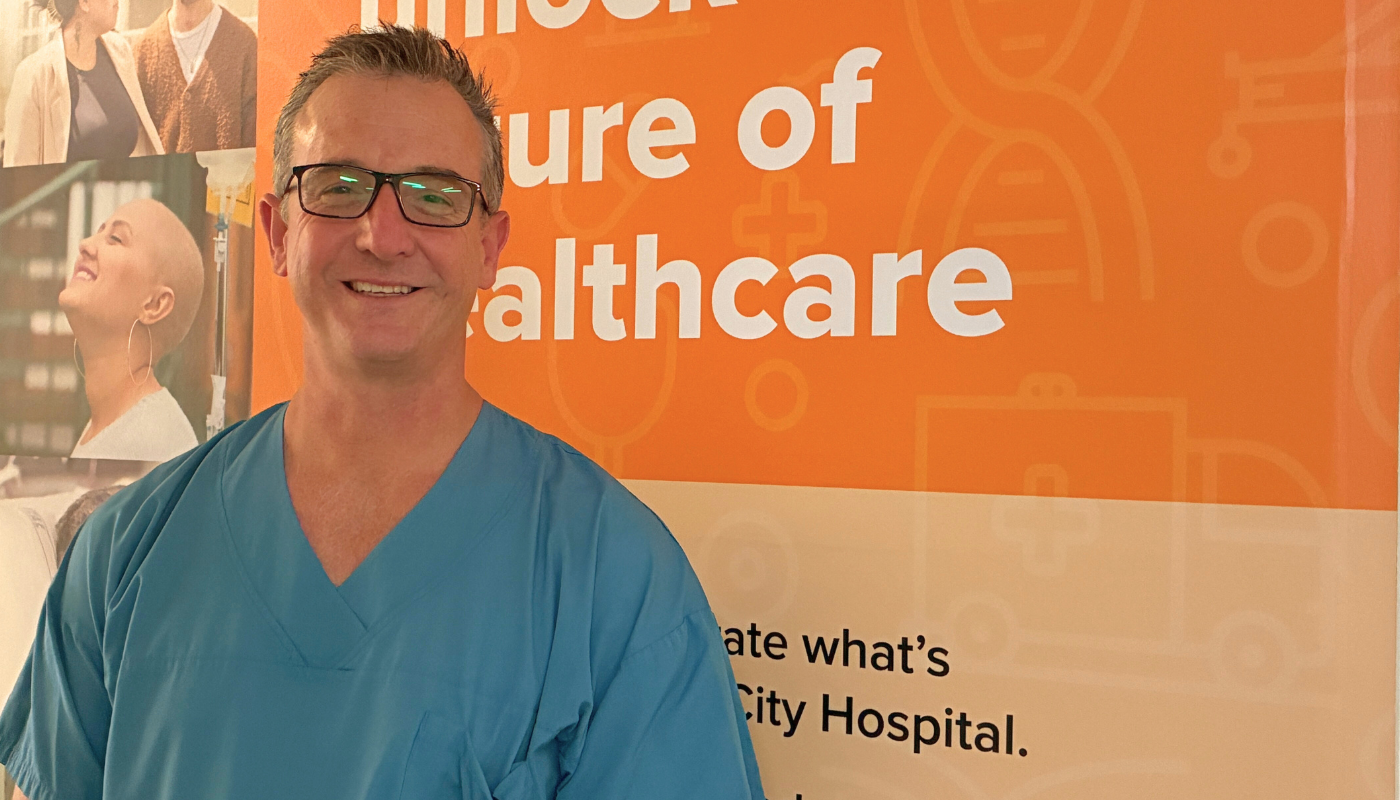
Can you introduce yourself and tell us about your role at Auckland City Hospital?
My name is Bevan Vickery. I’m an intensivist in the Cardiothoracic and Vascular Intensive Care Unit (CVICU), and I'm also an anaesthetist. In the CVICU, I’m Deputy Service Clinical Director and the ECMO Lead.
What is an intensivist?
An intensivist is a doctor who specialises in caring for critically ill patients in the Intensive Care Unit. We manage organ-support therapies, such as ventilation to help with breathing, medications to support heart function and blood pressure, and acute dialysis for kidney failure.
In CVICU, we also manage people requiring ECMO (Extracorporial Membrane Oxygenation). This is a form of life support for severe lung or heart failure, which can’t be managed with more conventional intensive care therapies.
What is the best part of your job?
The best part of my job is the challenge and privilege of looking after some of New Zealand's sickest patients. And one of the big rewards of working in CVICU is the team I get to work with. I’ve got a great group of medical colleagues, and our nursing staff is fantastic.
There’s a multidisciplinary team composed of physios, pharmacists, speech language therapists, psychologists, dietitians and social workers, who all combine to deliver great patient care, and it’s really fun to work in that environment.
How many people work in CVICU?
It’s a huge team. We have more than 180 CVICU nurses, with 40–50 trained in ECMO. There are currently 11 intensive care specialists, alongside 18 trainees. On top of that, there’s a full multidisciplinary team involved — so it really is a large group of people working together.
What sets your work apart from work happening at other hospitals in New Zealand, and how does it compare to worldwide work in your field?
Our CVICU is a specialised cardiothoracic intensive care unit, which is unusual in Australasia. Usually, you’ve got mixed intensive care units, whereas we’re one of the few dedicated cardiothoracic intensive care units.
We're the largest cardiac centre in New Zealand, and the second largest cardiac centre in Australasia, so we look after a lot of patients.
We’re the only heart and lung transplant centre for New Zealand, and we’re also the national ECMO referral centre. So anyone who needs ECMO comes to us.
Worldwide, I think we’re all aware that New Zealand has resource limitations, and we work within a resource-limited setting. But we’re very proud that we deliver world-class patient care.
Are there worldwide innovations happening elsewhere that we should be aspiring towards?
In terms of delivering excellent intensive care, we’re up there. There are therapies we don’t currently have available in New Zealand, mainly because they’re too expensive; but that's always in the context of whether they’re worth the cost, and how important they are in terms of the return you get for the spend. I’m really proud of the team and what we’re doing.
Can you estimate how many people have been treated in CVICU and the difference it makes to their lives?
We treated 52 patients on ECMO last year, and 64 the year prior. In total admissions, we cared for 2,000 patients last year alone. We have 10 ECMO pumps (shared with Starship), and along with bed availability and nursing staff, this determines how many patients we can look after at one time. Every patient on ECMO needs two nurses at any given time.
ECMO therapy makes a life-saving difference to our patients’ lives.
Are there any memorable cases that stand out to you?
ECMO cases are all memorable because they’re all people with severe heart, circulatory or respiratory failure who wouldn’t otherwise survive. For me, the most memorable cases are patients whose hearts have stopped at the point we’re putting them on ECMO – patients receiving CPR who have essentially died and then survive – those are really memorable.
How do you determine if a patient needs ECMO therapy?
A patient will go on ECMO for severe lung failure that can’t be supported with a ventilator, or for severe heart failure that can’t be supported with medications. Sometimes patients have both heart and lung failure, so they need ECMO that takes over the function of both the heart and lungs at the same time.
Lung failure is usually from infection – most commonly influenza or pneumonia – but sometimes things like asthma, and also from trauma (e.g. car accidents). Heart failure ECMO is often used for heart surgery patients who can’t come off bypass, viral infections of the heart, or heart attacks. ECMO is also used after a lung or heart transplant to support recovery.
What does government funding cover, and what relies on philanthropy?
ECMO is a big resource. Patients are very sick, often need long ICU stays, and they require two nurses, as well as expensive equipment. The pumps and delivery of care are funded by the government. Where we run into issues is training – the space, time, and equipment to train staff to deliver high-quality ECMO care – and simulation is a big part of our training. Philanthropy has helped with simulation mannequins and training equipment, and we now have plans for a dedicated simulation space.
It's essential we bring nursing and medical staff together in a simulated environment to practise caring for a patient on ECMO, especially the time-critical skills of putting someone on ECMO. Simulation allows us to practise technical skills, teamwork, and communication without putting patients at risk. The challenge is space and equipment, which is why a purpose-built simulation suite would make a huge difference.
If restraints weren’t a factor, what more could you do for New Zealanders?
Our services are always in demand, and we’re running out of space. The ECMO service is growing year on year, not shrinking, and we also need to continue training staff and supporting other centres across New Zealand.
Being able to expand would allow us to treat more cardiac surgery and ECMO patients – giving us the ability to save more lives.
With more support, we could also better cater to the patient and whānau journey. Many families come from outside Auckland, which creates financial strain. Patients spend long periods in ICU, and anything that makes the journey easier – accommodation, waiting spaces, psychological support – is really important and often relies on external funding.
To learn more about Cardiovascular Care at Auckland City Hospital, and how you can support this world-class team, click here.
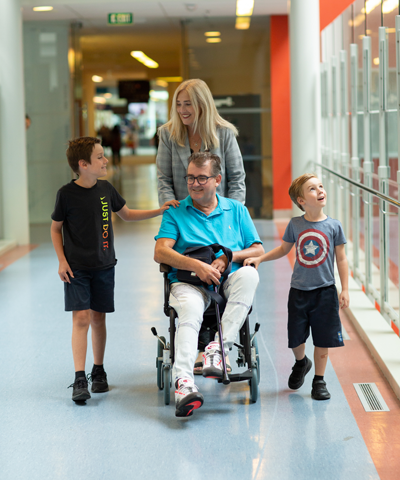
Meet Paul, lung transplant recipient and former ECMO patient, who spent seven weeks in the care of Auckland City Hospital's CVICU.
You can help our hospital help you.
Your support will help Auckland City Hospital’s teams do even more for patients and whānau in their care, beyond what government funding can provide.